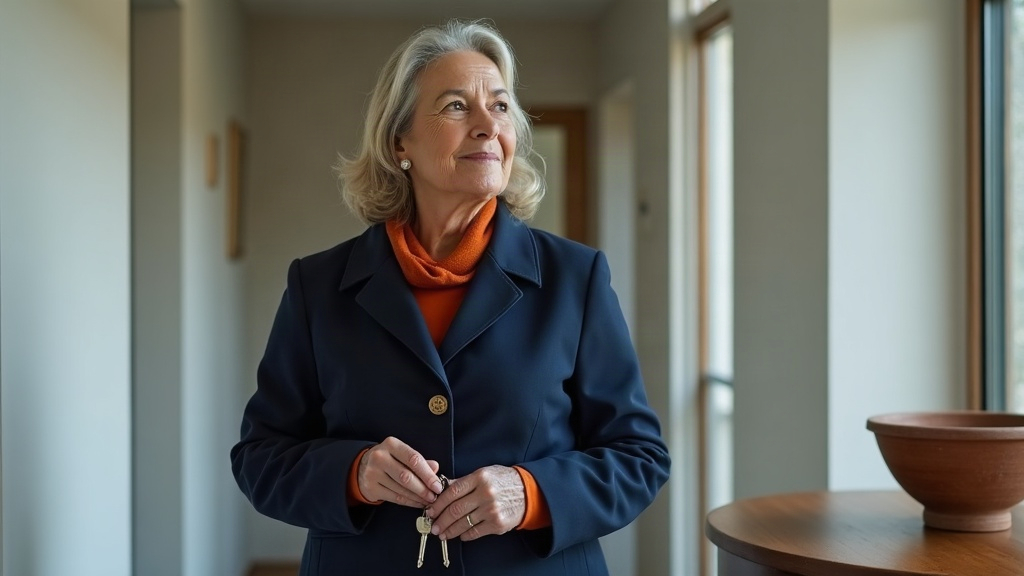
Your Memory Complaints Are Real, Why "Normal for Your Age" Isn't the End of the Conversation
You mentioned it at your last appointment. Maybe you said it carefully, the way people do when they're worried but don't want to seem dramatic: "I've been having more trouble with words lately," or "I keep walking into rooms and forgetting why." And your doctor nodded, ran through a quick mental status check, and said something like: it's probably just stress, or getting older.
You left feeling like you should feel reassured. You didn't.
That gap, between what you experienced and what you were told, is exactly what I want to talk about. Because if you have a family history of Alzheimer's or dementia, if you've been noticing changes that feel different from ordinary forgetfulness, or if your gut is simply telling you something is worth paying attention to, you deserve more than a dismissal dressed up as reassurance.
When Reassurance Becomes a Problem
There is a version of "nothing to worry about" that is genuinely true and appropriate. Forgetting where you put your keys while you're juggling three deadlines and sleeping poorly is not the same thing as early cognitive change. A good clinician knows the difference, and if your workup was thorough and you walked away with a real explanation, that matters.
But there is another version of this conversation that happens far too often: the brief office visit, the quick screening question or two, and the blanket reassurance delivered with the kind of confidence that forecloses further discussion. That version is not good medicine. It is a system limitation dressed up as expertise.
The conventional model was designed to catch disease after it has already shown up clearly. It is genuinely not built for early, subtle, pre-diagnostic changes in high-functioning people. That is not an indictment of every individual clinician. It is an honest description of where the system falls short, and why your concern may have been waved away before it was actually investigated.
Your complaints are real data. They deserve investigation, not dismissal.
What "Subtle" Actually Looks Like
One of the things I see repeatedly in my practice: people who are still performing well by every external measure, still doing their jobs and managing their lives, but who know something has shifted. Word retrieval that used to be effortless now takes a beat longer. Following a complex conversation in a noisy room feels harder than it did five years ago. The name of a person you've known for years simply will not come.
These are not nothing. They may not be Alzheimer's disease in the making. But they are signals worth taking seriously, especially in someone who has a parent or grandparent with dementia, or who carries a genetic variant like APOE4 (a gene associated with increased Alzheimer's risk).
The brain changes associated with Alzheimer's begin accumulating years, sometimes decades, before clinical symptoms appear. That window is not a waiting room. It is the most important period of time for intervention. The years before obvious decline has a chance to declare itself are precisely when a proactive approach can move the needle most.
If someone dismisses the early signals because there is no formal diagnosis yet, they are working with the wrong timeline.
Why "Wait and See" Is a Strategy Worth Questioning
Watchful waiting made sense in an era when nothing could be done before a diagnosis was confirmed. That era is increasingly behind us.
We now know that many of the factors contributing to cognitive decline are modifiable. Cardiovascular health, sleep quality, metabolic function, chronic inflammation, hormonal balance, mental health, and environmental exposures all play documented roles in how the brain ages. These are not fringe theories. They are mainstream findings that a whole-person, precision approach to brain health takes seriously and acts on.
Waiting for a formal diagnosis before addressing any of these is a bit like deciding not to wear a seatbelt until after your first accident. The logic doesn't hold. Acting early, broadly, and systematically is not overcaution. It is the rational response to what the evidence actually shows.
What I have seen in clinical practice, including in a formal Alzheimer's prevention clinical trial where a number of participants showed not just stability but an actual improvement in symptoms, is that the body and brain respond when you give them the right conditions. That does not mean results are guaranteed for anyone. It means the approach is grounded in something real, not wishful thinking.
Free, evidence-informed brain health education from Dr. Merrill, delivered weekly. Unsubscribe anytime.
Join the newsletter →What a Better Conversation Looks Like
If you leave a doctor's appointment feeling dismissed, you have options. None of them require you to be adversarial or to distrust medicine broadly. They just require you to advocate for the level of evaluation your concern deserves.
Here is what a more complete evaluation can include:
- Comprehensive cognitive testing: Not a two-minute screening, but a full neuropsychological evaluation that can detect subtle changes in memory, attention, processing speed, and executive function that brief tests miss entirely.
- Relevant lab work: Thyroid function, B12, inflammatory markers, metabolic panel, hormonal status, and more. A surprising number of memory complaints have reversible contributors that a standard annual physical does not catch.
- Sleep assessment: Untreated sleep apnea, for example, is a significant and often overlooked driver of cognitive symptoms. It is also highly treatable.
- Genetic context, where appropriate: Knowing your APOE status or your family history in detail can sharpen the clinical picture and inform how aggressively to pursue optimization.
- Specialist referral: A neurologist, neuropsychologist, or a clinician specializing in brain health can offer a level of precision that a general practitioner, however capable, is not always positioned to deliver.
This is not about catastrophizing. It is about getting a complete picture so that the plan you build is based on your actual situation, not a rushed reassurance.
You Are the Expert on Your Own Brain
There is a specific kind of frustration that comes from knowing your own mind well, noticing something has changed, and being told by a professional that you are imagining it or overreacting. I have heard this from patients who went on to demonstrate measurable changes on formal testing. I have heard it from people who had clear, addressable contributors to their symptoms that were completely missed at routine appointments.
Your self-knowledge is not a liability in this process. It is a clinical asset. The people who notice early and push for answers are not hypochondriacs. They are the ones who give themselves the best chance to act while acting still matters most.
I carry one APOE4 allele myself, and I have watched dementia move through my family in ways that shaped everything I do professionally. I did not respond to that history by waiting. I responded by learning as much as possible, getting my own workup, and optimizing every health factor I have influence over. I am not promising that approach will protect me completely. But I am not going to sit still and hope for the best, either.
You should not have to, either.
The Next Step Is Yours
If your memory concerns were dismissed and you are still not satisfied, that instinct deserves respect. Request a more thorough evaluation. Ask for a specialist referral. Seek a second opinion. Find a clinician who practices with a whole-person lens and is willing to look at the full picture: not just whether you meet criteria for a diagnosis today, but what your risk looks like, what might be contributing, and what you can do about it now.
Optimizing your brain health is not something you do after you get a diagnosis. It is something you do while you still have the widest possible window to work with.
The conversation your doctor ended is not over. It is just beginning.
This post is intended for educational purposes and does not constitute individualized medical advice. Please consult a qualified clinician for evaluation and guidance specific to your situation.
Frequently Asked Questions
My doctor said my memory issues are just stress or aging. How do I know if I should push further?
Trust your own observation of change. If you are noticing something different from how your memory and cognition have functioned for most of your adult life, that is meaningful information, especially if it is consistent, if it is affecting tasks that used to be automatic, or if you have a family history of dementia. A brief office visit is not designed to detect subtle, early changes in high-functioning people. Asking for a formal neuropsychological evaluation, more thorough lab work, or a referral to a specialist is a reasonable and appropriate next step. Advocating for a more complete picture is not overreacting.
What tests should I ask for if I think my concerns are being underaddressed?
A comprehensive neuropsychological evaluation is the starting point for detecting subtle cognitive changes that standard screenings miss. Beyond that, a thorough lab panel covering thyroid function, vitamin B12, inflammatory markers, blood sugar and insulin, and hormonal status can identify contributors that are frequently overlooked. A sleep study may be warranted if there is any concern about sleep-disordered breathing, which has a well-documented impact on memory and cognition. Genetic information, such as APOE status, can add context, though it is most useful when interpreted alongside clinical findings by someone experienced in brain health. None of these tests require a dementia diagnosis to justify ordering.
Is there a difference between forgetting things because of stress and early cognitive change?
Yes, and the distinction is worth understanding. Stress, poor sleep, depression, and anxiety all affect memory and concentration in ways that can feel alarming but are generally reversible when the underlying cause is addressed. Early cognitive change tends to be more consistent, less tied to obvious life circumstances, and often involves difficulty with things that previously required no effort at all, such as retrieving a familiar word or following a complex conversation. The overlap can make this genuinely hard to sort out without proper evaluation, which is exactly why a thorough workup is worth pursuing rather than accepting a blanket reassurance. A skilled clinician can help distinguish the two and, importantly, identify what is driving your symptoms regardless of which category they fall into.
I have a parent with Alzheimer's. Does that mean I'm going to develop it too?
Having a parent with Alzheimer's increases your statistical risk, but it does not make the outcome certain. Genetics are one piece of a much larger picture. Many of the factors that influence how the brain ages over time are modifiable, including cardiovascular health, sleep, metabolic function, chronic inflammation, and lifestyle factors. A family history is a strong reason to take a proactive approach rather than a reason to assume a fixed outcome. What it should prompt is earlier, more thorough evaluation and a systematic effort to optimize every factor you have influence over, long before any symptoms become significant. It is not a verdict. It is a reason to act.
What should I look for in a doctor or specialist who will take my concerns seriously?
Look for someone who asks detailed questions about your history, your symptoms in context, your family background, and your lifestyle, not just whether you can name the date and recall three words. Neurologists, neuropsychologists, geriatric psychiatrists, and clinicians who specialize in brain health or integrative medicine are generally better positioned to evaluate subtle, early concerns than a general practitioner working through a packed appointment schedule. The right clinician will treat your self-reported changes as data worth investigating, order appropriate testing, and work with you on a plan that is specific to your situation. If you leave an appointment feeling heard and with a clear next step, that is a good sign you are in the right place.
You do not have to wait for symptoms to take action
The years before obvious decline are the most important ones. A proactive, precision approach to brain health is available now, long before decline has a chance to declare itself.
Free, evidence-informed brain health education from Dr. Merrill, including new supplement reviews and program news. Unsubscribe anytime.
Sign up for the newsletter →Supplement quality varies widely, and what's on the label isn't always what's in the bottle. Dr. Merrill keeps a short formulary for older adults: products he considers most likely to be well made, with sensible formulations and doses for brain health. It's a reference point, not a shopping list — most people don't need most of what's on it, and the right choice depends on your own health, medications, and goals.
View the formulary on Fullscript →Educational information only, not medical advice. Talk with your clinician before starting a supplement, especially if you take prescription medications. Fullscript is an independent dispensary; orders are handled through its site.
Book a 1-hour educational consult with Dr. Merrill, or join the Annual Precision Brain Health Education Program for ongoing review and perspective across the year.
Request personalized help from Dr. Merrill →